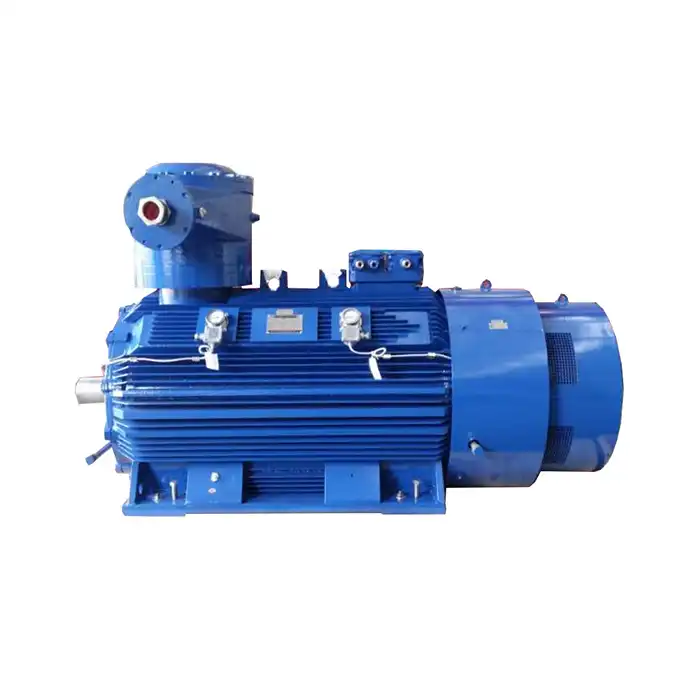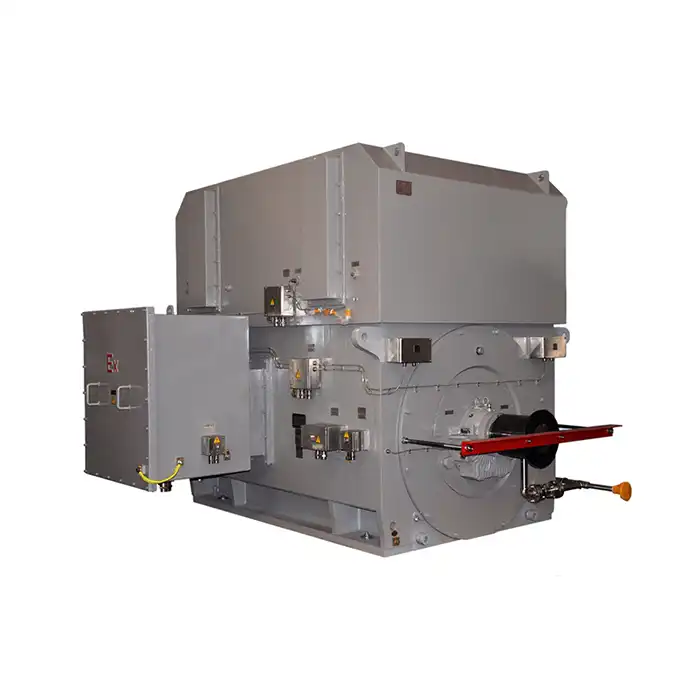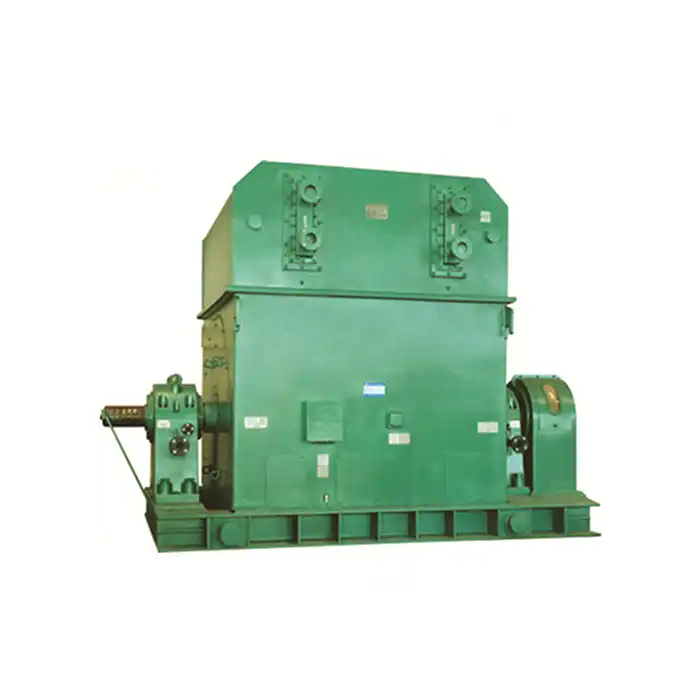




How A Vertical Water Pump Motor Works
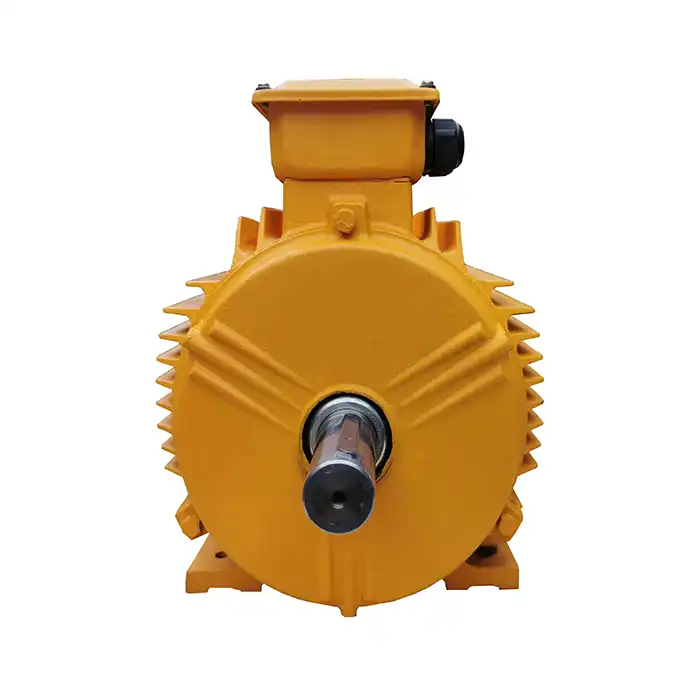
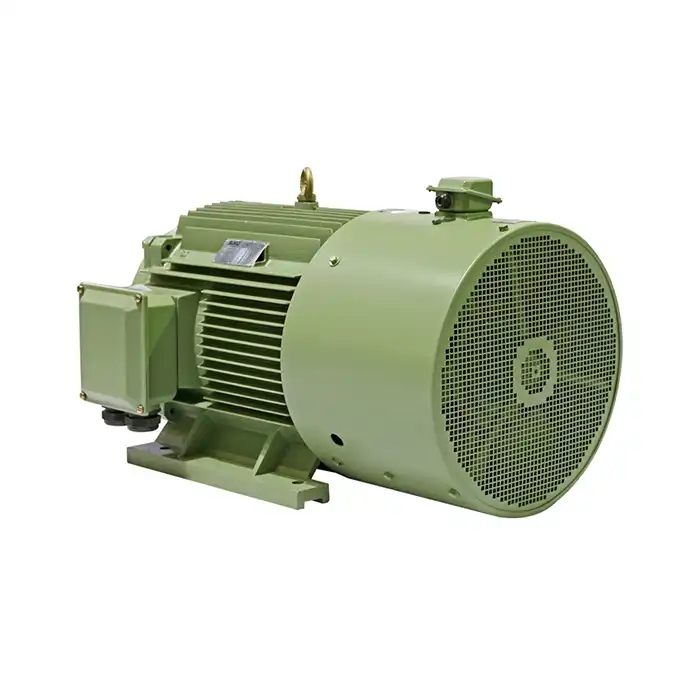
A vertical water pump motor combines an electric motor with a pump system that is positioned vertically. The motor turns electrical energy into mechanical movement, which moves the fluids efficiently through the impeller. This layout puts the motor shaft vertically, which saves floor space while still allowing for good starting and regular fluid handling. This makes it especially useful for industrial processes, water treatment plants, and irrigation systems.

Series:YVFE2
Frequency conversion range:30hz~50hz,5hz~70hz,5hz~100hz
Power range:0.75-355kW
Protection level:IP55
Application:are suitable for driving various mechanical equipment that require continuous and frequent forward and reverse rotation, such as steel rolling, lifting, transportation, machine tools, printing and dyeing, papermaking, chemicals, textiles, pharmaceuticals, etc., and can be used with various domestic and foreign variable frequency power supplies.
Advantage:high efficiency, wide speed range, high precision, stable operation, and easy operation and maintenance.
Certificate:installation dimensions comply with International Electrotechnical Commission (IEC) standards.
Others: SKF, NSK, FAG bearings can be replaced according to customer requirements.
Understanding How a Vertical Water Pump Motor Works
Core Operating Principles
Electricity moving through a wire is what makes a vertical water pump motor work. A spinning magnetic field is made when electricity runs through copper windings inside the stator. When this field hits the rotor, it creates power that turns the motor shaft. In vertical setups, on the other hand, the shaft is directly connected to the impeller, which can be below or above the motor case, based on the needs of the application. This straight arrangement has a lot of benefits. In places where floor space is valuable, like manufacturing plants and wastewater treatment plants, the small size is very important. The design also makes starting easier because the pump body stays buried or lower than the source of fluid. This makes it less likely that air will get trapped, which can happen with horizontal setups.
Essential Components and Their Roles
Understanding how parts combine makes operating efficiency clear. The motor case, which is usually made of cast iron, keeps the internal parts safe from outside contaminants and gives the structure strength. High-quality copper windings are better at conducting electricity, which lowers resistance losses and speeds up the rate at which energy is converted. The impeller, which is the working part of fluid motion, changes rotating energy into moving energy. Centrifugal force pushes fluid particles outward as the impeller blades spin. This creates low pressure at the entrance, which pulls more fluid into the pump chamber. This ongoing cycle keeps flow rates steady, which is important for cooling towers in factories, irrigation networks, and the spread of water in cities.
Motor Type Classifications
Vertical water pump motors are different depending on how they are wired and where they are installed. Three-phase motors are the most common type used in industry because they are efficient and produce a lot of power. They can usually work with voltages of 380V, 400V, 415V, or 660V systems that can be customized. These motors can convert frequencies between 5Hz and 100Hz, which lets you change the speed of the pump to match the needs of the process. Single-phase motors are used for lighter-duty tasks, but they are still not very popular in industrial settings. Submersible versions put the motor unit inside the fluid. This makes them perfect for pumping deep wells and draining mines where access issues make vertical water pump motor surface-mounted equipment impractical. Non-submersible designs keep the motor above the level of the fluid, which makes it easier to do repairs in HVAC systems and wastewater treatment plants.
Vertical Water Pump Motor Efficiency and Performance Optimization
Design Factors Influencing Efficiency
The total cost of ownership of a vertical water pump motor over its working life is directly related to how well it works. Choosing the right materials is very important. For example, our motors have strong cast iron frames that don't expand or contract when heated or when they're vibrated, and high-grade copper windings lower electrical resistance compared to aluminum ones. This combo makes things more efficient, and those wins add up over years of use. Thermal management keeps things running efficiently for longer job cycles. Our motors have Class F insulation that is rated to 155°C. This gives the windings enough headroom to keep them from breaking down. Built-in thermal protection sensors keep an eye on the inside temperatures and shut down the machine before any damage happens. This protects your investment and keeps the output steady.
Noise Reduction and Energy Conservation
In industrial settings, sound comfort is becoming more and more important along with efficiency. Precision-balanced blades keep supporting structures from being affected by vibrations as much as possible, which lowers working noise. Sealed bearings reduce mechanical noise even more and keep grease from getting dirty, which would increase noise and friction over time. Strategies for saving energy go beyond choosing the right parts. When you pair variable frequency drives with motors that can work between 5Hz and 100Hz, you can precisely control the speed. This way, the pump's output matches the demand at any given time instead of running at full capacity all the time. This method greatly lowers the amount of energy needed in systems where the flow needs to change, like process control systems in chemical and pharmaceutical production.
Maintenance Practices for Longevity
Scheduled maintenance keeps things running smoothly and stops unexpected downtime. Visual checks done on a regular basis can find early warning signs like too much shaking, strange noise, or high running temperatures before they become major problems. How often bearings need to be oiled depends on how they are being used, but once every three months is enough for most systems that are used continuously and where the temperature is between -20°C and +40°C. When to change seals depends on the type of fluid. In mining, abrasive slurries or chemically aggressive fluids in industrial processes speed up seal wear, so they need to be checked more often than when clean water is used. Keeping records of motor specs, wiring plans, vertical water pump motor and repair logs makes sure that safety rules are followed and makes it easier to figure out what's wrong when it happens.
Comparison and Decision-Making: Vertical vs. Horizontal Water Pump Motors
Structural and Spatial Considerations
Which configuration to use depends on the program. Because they use vertical space, vertical water pump motors don't take up much floor space. This is helpful in commercial buildings where every square meter is used to make something. The vertical shaft goes down into sumps or wells, so there is no need for long horizontal pipes that add complexity and friction losses. Horizontal motors take up more space, but they are easier to get to for regular repair. When technicians work on horizontal units, they don't have to work above or below the motor. This makes the job safer and makes it easier to check the bearings. But this ease of use comes at the cost of saving space, so horizontal plans aren't as good when equipment placement is limited by how the building is laid out.
Performance and Application Suitability
Different operational traits go beyond how things are physically arranged. Vertical designs work best in situations that need steady starting and little pressure lift, like water supply systems for cities and farms. When the impeller is underwater or placed low, it automatically keeps prime, which stops airlocks that stop flow and damage parts. Horizontal pumps work well in situations where the source of the fluid is at the same level as the pump, which cuts down on the need for a long handle. Horizontal layouts make it easier to connect to existing systems, which is helpful for residential HVAC systems and some commercial cooling lines.
Lifecycle Cost Analysis
When buying something, people have to weigh the original investment against the ongoing costs. Because they have special shaft seals and longer bearing systems, vertical water pump motors usually cost a little more up front. These costs are balanced out by lower construction costs (because small areas require less work to prepare the concrete pad and support the structure) and higher energy use due to better hydraulic efficiency. To save money on maintenance, vertical forms are often better in many workplace settings. The self-priming feature keeps the pump from spinning and wearing out, and the sealed bearing sections last longer between service visits than horizontal units that are open to more external contamination. All of these things lower the total cost of ownership over the 15–20-year life spans of most industrial motors.
Procurement Guide: How to Buy Vertical Water Pump Motors for Your Business
Defining Technical Requirements
A clear description of requirements is the first step to a successful purchase. Flow rate and head pressure standards set the standard. For example, watering systems need a lot of flow at normal pressures, while high-rise building water supply needs less flow at high pressures. Our YVFE2 line has power ranges from 0.55kW to 315kW, so it can meet a wide range of business needs, from small process pumps to big water treatment plants. The electrical specs must match the infrastructure of the building. Whether voltage is 380V, 400V, 415V, or 660V decides whether a vertical water pump motor will work, and for industrial-scale units, three-phase power must be available. Frequency conversion needs affect the choice of processor.
Motors rated for 5Hz to 100Hz operation are better for uses that need a wide range of speeds, giving them the freedom that single-speed designs can't match. Environmental factors shape protection requirements. Our IP55-rated shelters keep dust out and keep water jets from hitting them, so they are good for most industrial settings. Facilities that have toxic atmospheres or a chance of explosions may need higher levels of security, which are offered upon request. The motor's efficiency is also affected by the temperature and altitude. Our basic units work successfully up to 1000 meters above sea level and in temperatures ranging from -20°C to +40°C.
Pricing Strategies and Logistics
When you buy in bulk, you save a lot of money. When you make a volume promise, you can get better prices that make the project more profitable. This is especially true for installations with multiple units in water treatment plants or large-scale irrigation projects. We have clear pricing systems that take into account the level of customization, delivery times, and payment terms. This way, buying teams can make sure that their budgets for projects are correct. Lead times change based on the difficulty of the order and the production plan. Standard setups ship within set times, but unique specs need longer production times to allow for quality testing and engineering approval. When sending goods around the world, it's important to keep track of paperwork, follow customs rules, vertical water pump motor and choose the right freight. We organize all of these things to speed up delivery and reduce delays.
Troubleshooting and Installation Guide for Vertical Water Pump Motors
Installation Best Practices
An installation that is done right sets the stage for effective functioning. Before starting to prepare the site, you need to make sure it is level and has a base that stops vibrations. This can be done with concrete pads or structural frames. The alignment of the shafts between the motor and the pump must be within the manufacturer's limits. This is usually checked with precision dial indicators or laser alignment tools that can find both rotational and parallel misalignment. When making electrical connections, you need to pay close attention to grounding and timing. If the phase order is wrong, the spinning goes backwards, which could damage the impellers or check valves. Ground links keep people safe from electrical problems and stop voltage potential differences that speed up the rusting of bearings.
When integrating a control circuit, whether it's a direct-on-line starting, a star-delta setup, or a soft-start system, it must match the motor's specs to avoid too much inrush current. The links between pipes affect how well hydraulics work. It is best for suction pipes to have smooth changes in width and as few elbow joints as possible, which can cause swirling and head losses. Check valves are needed in discharge pipes to stop backflow when the system is turned off. This keeps the motor safe from reverse-spinning stress. With the right support, the weight of the pipes doesn't move to the pump flanges, which would cause them to become out of line over time.
Documentation and Compliance Management
Keeping detailed records helps you follow the rules and makes future service easier. When techs are fixing, they look at motor nameplates to find important information like power rate, voltage, frequency range, insulation class, and safety level. Wiring designs show how electrical connections are made, which prevents mistakes from happening when circuits are changed or when equipment is moved. Maintenance logs keep track of past work, finding trends that are used to plan preventative maintenance. Keeping track of when bearings are replaced, seals are changed, and lubricant dates are recorded helps find parts that are getting close to the end of their useful life. This way, planned maintenance can be done during planned breaks instead of fixes being done on the spot during production shifts. This preventative method keeps operations running smoothly and increases the useful life of assets.
Conclusion
Vertical water pump motors are stable and take up little room. They are used in industrial automation, HVAC, energy services, and other specialized areas to move fluids. Understanding working principles, how components interact, and design trade-offs helps procurement workers choose equipment that works best and costs the least over its lifetime. Our YVFE2 line blends tried-and-true design elements like cast iron construction, high-grade copper windings, and accurate bearings with adaptable specs that meet a wide range of industrial needs. These investments are protected by proper installation, proactive upkeep, and organized maintenance, which guarantees consistent performance over longer service lives. When you work with qualified providers who offer full help and quality guarantee, your business is set up for long-term success.
FAQ
1. What distinguishes vertical water pump motors from horizontal configurations?
Vertical water pump motors put the shaft vertically, which takes up less floor space and makes starting easier when the pump is below or at the level of the fluid. Horizontal motors take up more space, but they are easier to maintain. Vertical designs work best in industry settings with limited room, while horizontal designs work best in settings with lots of space and easy access to service needs.
2. How frequently should vertical water pump motors undergo maintenance?
How often maintenance needs to be done depends on the working conditions and job patterns. Continuous-duty industrial motors that work in clean settings usually need to have their bearings inspected and oiled every three months. When gritty or chemically active fluids are used, the seal needs to be checked more often. Extreme temperatures, high humidity, or dirty air can also shorten the time between services. Setting standard data for temperature and sound during startup makes condition-based maintenance possible, which is maintenance that is based on how the equipment is actually working.
3. Can vertical water pump motors be customized for specialized applications?
Customization meets the specific needs of a business. Voltage rates change to match the electrical system of the building, and mounting arrangements change to fit available space. Bearing choices take into account what the client wants in terms of stock parts for upkeep. The frequency change bands make operations more flexible by letting process applications control the speed in different ways. For tough areas that need better seals, protection levels go up. Our engineering team works with clients to come up with specs that make the vertical water pump motor work best in certain workplace settings.
Partner with XCMOTOR for Reliable Vertical Water Pump Motor Solutions
For industrial processes to run smoothly, they need pumping equipment that always does its job without wasting space or going over budget. XCMOTOR makes vertical water pump motors that are designed for tough jobs in the energy, water treatment, industrial, vertical water pump motor and HVAC industries. Our motors have specs that are IEC-compliant, protection rating IP55, and power ranges from 0.55kW to 315kW. They also come with a full set of quality standards, such as ISO 9001:2015, CE marking, and GOST approval.
Our ability to customize in a variety of ways, including meeting specific power needs, bearing brand tastes, and mounting setups, is helpful for procurement teams. We keep our prices low for large orders while making sure they get to you quickly by streamlining the shipping process. Our team is available seven days a week, including weekends, to answer any operating questions or meet any repair needs that come up during the life of your motor.
Get in touch with XCMOTOR right away to talk to our tech experts about your vertical water pump motor needs. We offer custom solutions and solid help after the sale, whether you need a single repair unit or equipment for an installation with multiple sites. You can email our team at xcmotors@163.com for more information. Get in touch with a reliable vertical water pump motor provider that wants to help your business succeed.
References
1. Karassik, Igor J., et al. Pump Handbook. Fourth Edition. McGraw-Hill Education, 2008.
2. Sular, Aydın. Electric Motor Handbook: Selection, Application, and Maintenance. CRC Press, 2019.
3. Brennan, Jack. Centrifugal Pumps: Design and Application. Second Edition. Gulf Publishing Company, 1998.
4. Gülich, Johann Friedrich. Centrifugal Pumps. Third Edition. Springer, 2014.
5. McNaughton, Kenneth. Pump Selection and Application: A Guide for Engineers. Elsevier Science, 2005.
6. American Society of Mechanical Engineers. ASME B73.1-2012: Specification for Horizontal End Suction Centrifugal Pumps for Chemical Process. ASME Standards, 2012.